
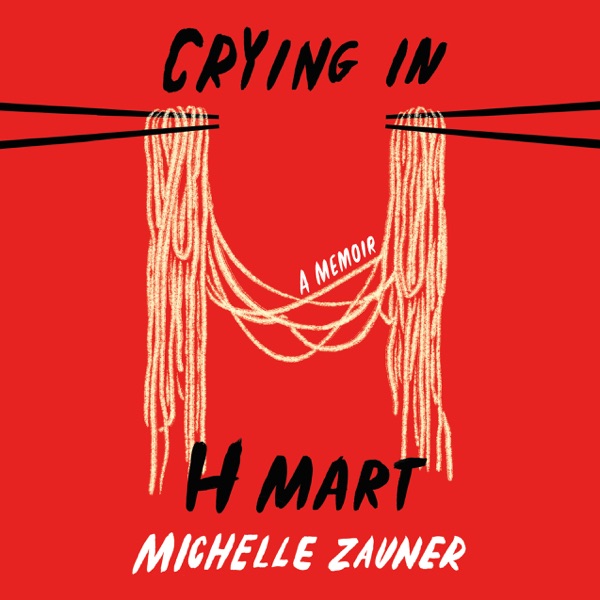


How much of your mother lives in your taste buds? Consider this your spoiler-free guide to the Crying in H Mart audiobook. That’s the question Michelle Zauner forced me to sit with over the seven hours and twenty-three minutes of Crying in H Mart—and it’s a question I’m still turning over weeks later.
This is a memoir about Korean American identity, terminal illness, and the way food becomes a language when words fail. It’s also—and this is what makes it luminous—an audiobook that only works because Zauner narrates her own story. There’s no distance between you and her grief, no interpretation standing between you and the raw truth of it.
The Intimacy of Her Own Voice
The genius here is immediate: when Zauner reads passages about discovering her mother’s diagnosis, about the specific shame of being Asian American in a small town, about learning to cook her mother’s recipes after she’s gone—you’re not hearing someone perform sadness. You’re hearing the actual voice living through those reckonings. She doesn’t dramatize. She speaks the truth quietly, and that quiet is devastating.
Get the Crying in H Mart Audiobook on AmazonListen on Audible · also in Kindle & printThe audio production is deliberately unadorned. It’s just her voice, the text, and you. No music. No theatrical pauses. No sound design to manipulate your emotions. That restraint is exactly right for Zauner’s writing, which builds entire emotional landscapes through precise sensory detail—the weight of a specific banchan at H Mart, the Korean words she never quite learned to use fluently, the gap between what she wanted to say to her mother and what she actually said. Your narrator has to trust that precision, and she does. She lets the words do their work without interference.
Food as Argument, Grief as Recipe
H Mart—the Korean American supermarket chain—becomes more than a setting. It becomes a place where Zauner can touch her mother’s absence, where she can reconstruct identity through ingredients and recipes that her mother never formally taught her. Listening to her describe the textures and names of Korean food, the way she code-switches between Korean and English, then acknowledges the gap between them—you feel how food is translation. How it’s also grief. How it’s also belonging, even when it’s incomplete.
| Author | Michelle Zauner |
|---|---|
| Narrator | Michelle Zauner |
| Length | 7 hours 23 minutes |
Michelle Zauner narrates across 7 hours and 23 minutes with the kind of pacing that never feels rushed or overextended. The production is straightforward; there are no manipulative sound effects, just her voice and her words. This matters because Crying in H Mart earns its emotional weight through specificity and quiet observation, not through stylization. When Zauner reads about her attempts to connect with her mother through cooking, about the recipes she searched for, about the shame and longing braided together in Korean American identity—these passages land differently because it’s her actual voice. Not because she performs emotion, but because the authenticity of that voice becomes the thing you’re listening for.
Living in the Open Wound
This is not a book about finding closure or cooking your way to peace. It’s a book about the fact that some losses stay open. That you don’t “recover” from your mother’s death; you learn to live differently inside it. Zauner doesn’t resolve that tension—she sits in it, honestly. She writes about her grief, her identity, her complicated relationship with her own Koreanness with the kind of unflinching clarity that takes years to earn. And because she’s the one narrating, because you hear her actual voice making peace with ambiguity and grief, the audiobook becomes almost conversational. Like she’s telling you this over time, the way you might to someone you trust.
Get the Crying in H Mart Audiobook on AmazonListen on Audible · also in Kindle & printIf you’ve listened to memoirs about identity and family loss—particularly When Breath Becomes Air or Educated—Crying in H Mart will sit alongside them as a quiet, necessary book. It’s not about triumph or transcendence. It’s about the daily work of living after loss, and the specific kind of love that gets encoded in ingredients your mother never quite taught you how to prepare.
FAQ
Do I need to know anything about Korean culture to understand this audiobook? No—Zauner translates everything generously. The memoir is specifically about the gaps in her own understanding, so you’re never meant to be an expert.
Is this a heavy listen? Yes, thoughtfully so. It’s not gratuitously sad, but it’s unflinching about grief and terminal illness and the ways family shapes you.