
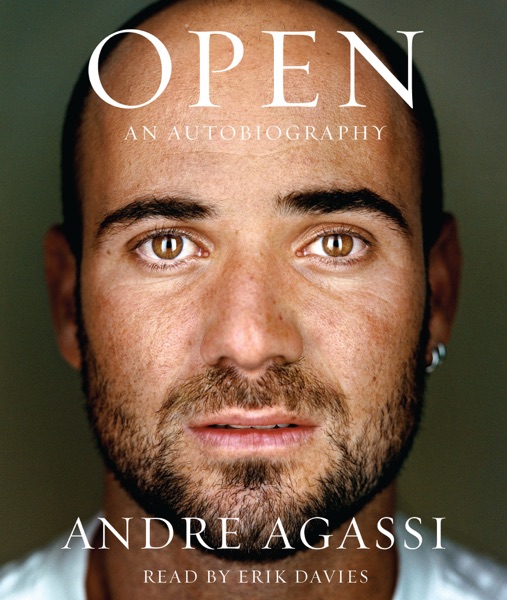


I wasn’t planning to spend eighteen hours inside Andre Agassi’s head. Consider this your spoiler-free guide to the Open audiobook. I’d queued Open for a lazy August evening—just something to spin while I folded laundry and half-watched the news. But somewhere around hour three, folding stopped happening. By hour seven, I realized I’d been sitting motionless on my kitchen counter, coffee cold beside me, completely absorbed in the voice of a man I thought I already knew everything about.
What caught me off guard wasn’t the tennis. It was the rage.
A Champion Who Hated His Art
Agassi doesn’t just confess his hatred of tennis—he builds an entire philosophy around it. This isn’t a sports memoir where an athlete finds redemption through their craft. This is a man untangling decades of paternal pressure, manufactured personas, and the suffocating weight of being Andre Agassi before he had any say in it. The early chapters sting with that resentment: the hairspray, the image, the aggressive pursuit of something that never felt like his own.
What makes this confession land so powerfully in audio form is Erik Davies’ performance. Over eighteen hours, Davies inhabits Agassi’s voice without ever feeling performative. He’s matter-of-fact when describing the most vulnerable moments—standing at the baseline as a world-class player, yearning to quit. That restraint makes the moments of raw emotion hit harder. When Agassi talks about his father’s disappointment or his own self-sabotage, Davies doesn’t oversell it. He lets it breathe.
Like Matthew McConaughey’s Greenlights, this is a celebrity memoir that refuses easy inspiration. But where McConaughey traces a winding path to contentment, Agassi charts a collision course with the person he was forced to become.
The Image Machine That Broke
The Vegas kid, the denim shorts, the Andre image—none of it was Agassi’s invention. His father, Mike, designed it all, and Andre spent his childhood and young adulthood wearing it like armor. Reading (or listening to) the chapters about his parents, his brother Philly, and the Bollettieri tennis academy, you understand why Agassi played so aggressively on court: his entire identity was built on aggression and performance, not joy.
Get the Open Audiobook on AmazonListen on Audible · also in Kindle & printWhat’s remarkable is how honest Agassi is about the cost. The marriages that crumbled. The drugs. The moment he hit rock bottom and realized he’d spent his peak years running from himself instead of running toward anything real. Davies’ narration in these sections is particularly subtle—he’s describing devastation, but without melodrama. It feels like sitting across from someone at 2 AM, hearing the truth they’ve been too exhausted to hide.
Winning After Giving Up
The second half of Open shifts ground. Agassi finally stops performing and starts living. He commits to the sport, not because his father demands it, but because he chooses it. That distinction changes everything. The French Open victories, the return to number one, the Australian Opens—they’re played by a man who owns his own time now. Davies captures that shift in tone: the voice becomes less defensive, more grounded.
This is also where Agassi becomes a teacher and philanthropist, working with his foundation. Get the Open Audiobook on AmazonListen on Audible · also in Kindle & print The portrait that emerges isn’t a redemption arc so much as a reckoning. Agassi didn’t become a good person through tennis; he became a whole person despite it.
Eighteen Hours Well Spent
I finished Open on a Tuesday morning, Erik Davies’ narration fading to silence in my headphones. I sat in my car for ten minutes afterward, still thinking about Agassi’s daughter, his marriage to Stefanie Graf, his decision to leave the game on his own terms. The audiobook never feels like a celebrity recounting highlight reels.
| Author | Andre Agassi |
|---|---|
| Narrator | Erik Davies |
| Length | 18 hours |
If you’ve loved memoirs that dig into identity and family legacy—if Trevor Noah’s Born a Crime moved you—Open will pull you in the same way. You don’t need to care about tennis. You just need to care about people telling the truth about who they were forced to be, and who they chose to become.
Listen Next: