

What important truth do very few people agree with you on?
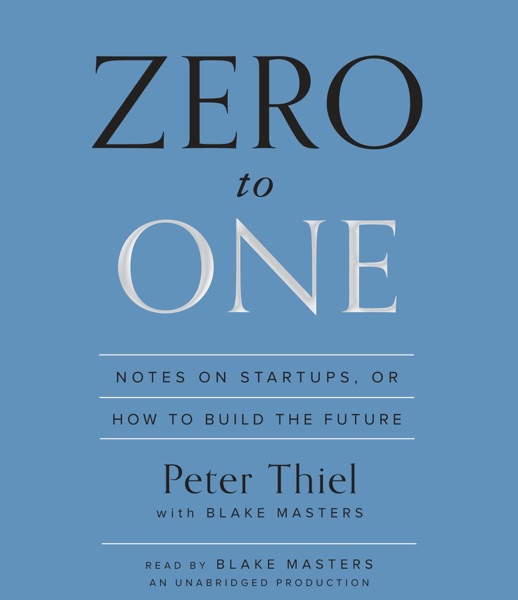
That question stopped me mid-task the moment Blake Masters asked it—his voice carrying Thiel’s philosophical weight through my headphones. I wasn’t expecting an audiobook to make me uncomfortable in the best way possible. Most business books I’ve consumed over the years trade in conventional wisdom dressed up as revelation. Zero to One does the opposite. It sits with paradoxes, challenges assumptions most founders take for granted, and forces you to sit with ideas that feel wrong at first.
Listening to this over the course of a few days, I kept finding myself rewinding to catch passages I’d half-absorbed the first time. Blake Masters’ narration is crisp and conversational—he doesn’t overdo the dramatic pauses or affect a false gravitas. The book is technical enough to demand attention, but his delivery keeps it accessible, like you’re in a room listening to someone who understands both the theory and the stakes.
What struck me most about the audiobook format here is how Thiel’s contrarian framing works better when heard than read. There’s a rhythm to how he builds an argument: venture capital isn’t what everyone thinks. Monopolies aren’t the enemy. Competition is a trap. You don’t plan for the future by extrapolating the past. Each claim arrives like a puzzle piece, and by the end, the whole picture looks different. When Masters delivers these lines, they land with more punch than they would on a page—you can’t skim, can’t dismiss. You have to sit with them.
The book moves through Thiel’s philosophy on startups, competition, founders, and the future. He’s dismissive of conventional business school wisdom, and he earns that right by building a coherent framework. Some readers find this arrogant. I found it clarifying. Whether you agree with every premise or not, Zero to One forces specificity. You can’t engage with it passively. That’s why so many founders and entrepreneurs reference it, and why—years after publication—it still lands as genuinely provocative.
If you’ve been thinking about how to build something genuinely new, you’ll recognize this book’s thesis almost everywhere now: in the cult of growth-at-all-costs, in VC pitches, in the way tech companies talk about disruption. Thiel was saying this stuff before it became fashionable, and this audiobook preserves that originality.
At roughly 4 hours and 50 minutes, it’s dense but digestible in chunks. I listened during commutes and while working, and the length felt right—long enough to develop real depth, short enough that you can revisit passages easily. Masters keeps the pacing brisk without rushing, which matters when you’re dealing with conceptual material that rewards concentration.
A few caveats: if you’re looking for a step-by-step startup manual, this isn’t it. Thiel is interested in philosophy and strategy, not tactics. And some of his ideas are genuinely controversial—he’s not afraid to stake claims that others consider cynical or troubling. But that’s precisely what makes the book worth engaging with. It won’t let you coast on received wisdom.
If you’re building something and want to clear away the fog of conventional thinking, Zero to One on audio is a bracing, focused experience. Similar in spirit—though very different in voice and approach—are works like Deep Work and The Obstacle Is the Way, which also challenge standard assumptions about productivity and resilience. Thiel’s book sits alongside them as essential contrarian reading for anyone trying to create something that matters.
| Author | Peter Thiel |
|---|---|
| Narrator | Blake Masters |
| Length | 4 hours 50 minutes |
Blake Masters’ narration keeps the material engaging and propels you through Thiel’s arguments without overselling them. This is how you want philosophy delivered in audio: clear, steady, and unadorned. Whether you’re new to Thiel’s thinking or revisiting the book, the audiobook version is worth your time.