
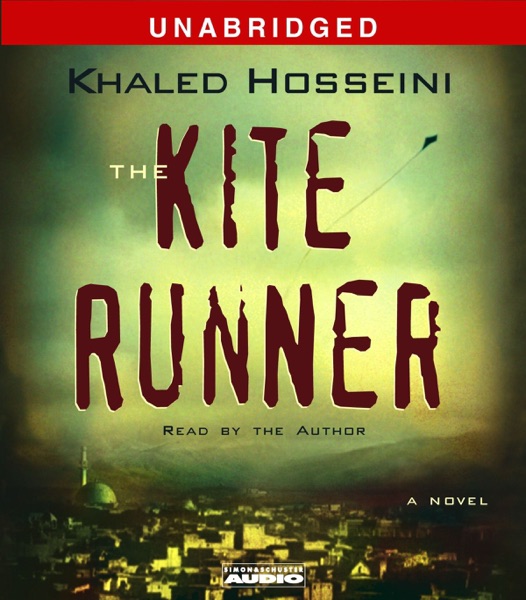


What would you do if you couldn’t undo a moment that defined your entire life? I’ve spent real hours with the Kite Runner audiobook, so here is the verdict. This question haunted me long after Khaled Hosseini’s The Kite Runner ended. It’s a book that doesn’t ask gentle questions—it asks the ones that burrow into your chest and refuse to leave.
I came to this audiobook thinking I knew what it would be. Afghan boy, childhood betrayal, decades of guilt, redemption arc. I’ve read enough literary fiction to spot the architecture. But Hosseini doesn’t give you a comfortable story with neat corners. Instead, he gives you two boys in Kabul, a kite, and a moment so devastating that the weight of it carries across thirty years and half a world.
The audiobook is read by Hosseini himself—a choice that transforms the entire experience. His voice carries an intimacy that a third-party narrator simply couldn’t capture. When he returns to Afghan place names, Urdu phrases, and the intimate memories of his protagonist Amir, there’s an authenticity in the pronunciation and emotional texture that grounds you completely. This isn’t a performance; it’s a confession. The runtime of 12 hours gives Hosseini room to breathe through each scene, and he uses that space masterfully.
A Friendship Built on Silence
Amir and Hassan’s relationship is what makes this novel devastating. They’re not equals—Hassan is the servant’s son, Amir the master’s son—but in childhood, they’re inseparable. They chase kites, share stories, dream together. And yet there’s already something unspoken between them, an asymmetry in what each can ask of the other. When I listened to those early chapters, I kept thinking about A Thousand Splendid Suns, another Hosseini work that explores how power and circumstance warp even the deepest bonds. That book examines female friendship across class; The Kite Runner tears apart the myth of male loyalty when one person holds all the power.
The Weight of Inaction
Here’s what stays with me: Hosseini never lets Amir—or you—off the hook for what happens in the alley. This isn’t a book where the protagonist can claim ignorance or weakness and move on. The act of witnessing without intervening becomes its own sin. As someone who listens to a lot of psychological fiction, I found myself comparing this to A Little Life, which also examines complicity and the damage we carry in silence. But where A Little Life sprawls across decades, The Kite Runner is laser-focused: this one moment, this one failure, and what it costs.
Get the The Kite Runner Audiobook on AmazonListen on Audible · also in Kindle & printHosseini doesn’t let his protagonist off easy, and he doesn’t let you forget what silence enabled. That’s the whole haunting engine of the book—not the act itself, but the choice to look away.
Redemption That Costs Something Real
The second half of the audiobook shifts to Amir as an adult, recalling his past and finally being forced to reckon with it. I won’t spoil the mechanics of how that reckoning unfolds, but I will say this: Hosseini doesn’t offer cheap forgiveness. Redemption here is painful, specific, and utterly earned. By the time Hosseini’s voice reaches those closing scenes, you understand that some silences can be broken, but not without cost.
The audiobook’s length—those 12 hours—becomes part of the emotional work. You sit with Amir’s shame. You live in his cowardice. And when he finally acts, the reversal hits hard because you’ve spent so long in his passive, haunted state.
Get the The Kite Runner Audiobook on AmazonListen on Audible · also in Kindle & printWhy This Matters Now
Twenty years after its first publication, The Kite Runner remains unsettling because it refuses to make its characters—or its readers—comfortable. It asks what we’re capable of overlooking. It asks what we owe to people we’ve abandoned. It asks whether we can come home.
| Author | Khaled Hosseini |
|---|---|
| Narrator | Khaled Hosseini |
| Length | 12 hours |
If you’re ready to sit with a book that doesn’t let you look away, that refuses to tell you that time heals all wounds or that good intentions matter more than actions, then press play on this audiobook. Hosseini’s narration is essential—his voice carries the weight of something lived, not performed. This is the kind of story that stays with you long after those 12 hours end, the kind that changes how you think about friendship, loyalty, and the silences we carry.