
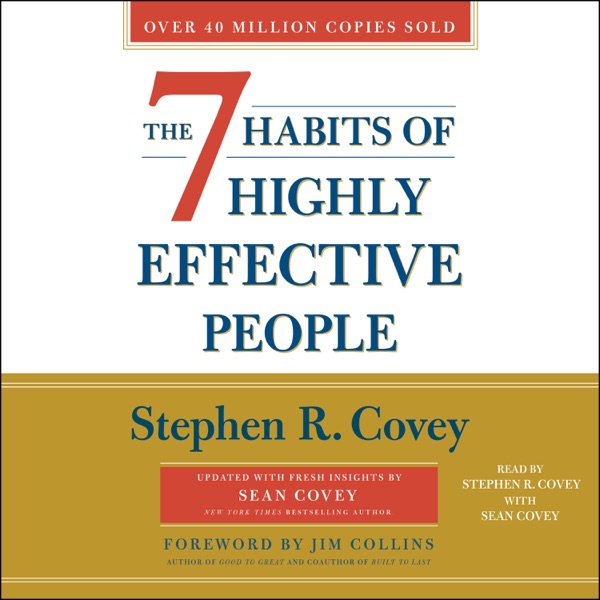


“That book is from the 80s. Below is how the 7 Habits of Highly Effective People audiobook actually plays out loud. Corporate self-help nonsense. Everyone talks about it but nobody actually uses it.” I hear this objection constantly. And honestly? The skepticism makes sense. Covey’s magnum opus has become so ubiquitous in business culture that it’s easy to assume it’s been metabolized into corporate training cliches—diluted, packaged, and drained of real substance. But here’s what I discovered listening to the 30th Anniversary Edition: the original argument is far more radical than what trickled down into motivational posters and boardroom buzzwords. Covey isn’t selling you quick fixes or networking hacks. He’s asking you to rebuild your entire foundation, which is actually harder than it sounds.
Why the Objection Misses the Point
The core reason skeptics dismiss this book is that they’ve only ever encountered *fragments* of it—a habit here, a principle there, usually severed from Covey’s larger thesis. Listening to the full unabridged audiobook (15 hours 7 minutes, narrated by Stephen R. Covey and his son Sean Covey) reveals something different: this isn’t a time-management hack book or a productivity manual. It’s an argument about *character*. Covey spends the first half building his case for an inside-out approach to change—the idea that if you want different results, you don’t fiddle with your external behavior first; you realign your internal principles and paradigms.
That distinction matters because most self-help books promise to fix you from the outside in. Read this, follow these steps, adopt this habit, and your life transforms. Covey says no. He’s after something deeper, and the audiobook performance—with Covey himself narrating his own ideas—carries a gravitas that the text on a page somehow lacks. Get the The 7 Habits of Highly Effective People Audiobook on AmazonListen on Audible · also in Kindle & print When he talks about dependence, independence, and interdependence as stages of psychological maturity, you feel the weight of someone who spent decades thinking about this, not someone selling you a system.
The Matrix That Actually Changes How You Listen
Covey’s famous Urgency/Importance Matrix (Quadrant II thinking, for those who’ve encountered it in fragments) is genuinely useful, but it’s a tool, not the philosophy. The real payload is in the seven habits themselves, which build on one another. Habits 1-3 (Be Proactive, Begin with the End in Mind, Put First Things First) are about *personal mastery*—gaining control of your own character and priorities. Habits 4-6 (Think Win/Win, Seek First to Understand, Synergize) are about *interpersonal effectiveness*—relationships and collaboration. Habit 7 (Sharpen the Saw) is about *renewal* and maintaining all of it over a lifetime.
The structure is methodical, almost mathematical, and you can see why this book became a classic in organizational change. But here’s where I’ll admit the skeptics have a point: parts of the book feel dated. The examples are from the 80s and 90s. The corporate case studies have aged. Yet the *principles* remain stubbornly relevant because human nature hasn’t changed.
| Author | Stephen R. Covey |
|---|---|
| Narrator | Stephen R. Covey, Sean Covey |
| Length | 15 hours 7 minutes |
When Listening Actually Means You Have to Change
The audiobook format does something interesting here: it forces you to sit with Covey’s ideas without the option to skim. You can’t flip past the parts about conscience and character-based principles. You’re left alone with his argument for 15 hours, and either you’re genuinely wrestling with it or you’re zoning out. If you’ve ever worried that you haven’t read enough of the “classics,” audiobooks like this solve that problem—you’re not cheating by listening; you’re engaging with the full text as intended.
What makes this different from something like Atomic Habits (which gives you small, compounding behaviors) is that Covey wants you to audit your *values first*, then build habits around those. It’s more uncomfortable. It requires you to actually define what matters to you before optimizing your day. That’s why so many people have bought this book without reading it—the title sounds good, but the work it asks of you is genuinely demanding. If you’re looking for a gentler entry into principle-centered living, Start with Why might feel less prescriptive, but Covey isn’t interested in being gentle. He’s interested in being effective.
Who Benefits from Actually Finishing This
You should listen to this if: you’re serious about examining your own priorities and don’t mind being challenged on them; you’re leading people and want to think about character-based leadership; you’ve been burned by quick-fix productivity systems and are ready to do deeper work; you can tolerate repetition in service of genuine principle-building. Get the The 7 Habits of Highly Effective People Audiobook on AmazonListen on Audible · also in Kindle & print
You might skip this if: you need immediate tactical changes (try atomic habits instead); you’re looking for a fun listen (this is earnest, sometimes dry); you’ve absorbed the core ideas through other means and don’t need the full-length treatment.
FAQ
Q: Is the Stephen R. Covey narration any good?
A: Yes, genuinely. Hearing him read his own work lends authority and sincerity. Sean Covey’s contributions also add dimension. It’s not dramatized or heavily produced—just clear, deliberate, and professorial.
Q: Do I need to listen to the whole 15 hours?
A: No. You can drop in at any habit and get value. But the first half (dependence, independence, interdependence framework) is essential to understanding *why* Covey structures the habits as he does. Skipping that is like reading the last chapter of a thriller.
Q: How is this different from the 30th Anniversary Edition vs. older versions?
A: The 30th Anniversary Edition includes Sean Covey’s reflections and updates, making it more current without losing the original insight. If you’re starting fresh, this is the version to listen to.