
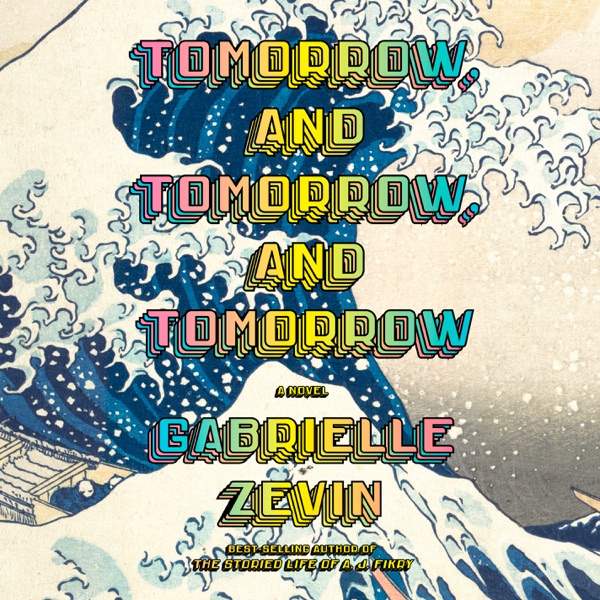


The arcade bleeps in the background—chiptune soundtrack bleeding through worn speakers. Here’s what the Tomorrow and Tomorrow and Tomorrow audiobook is really like. You can almost feel the curve of the controller in your palm, the give of the buttons under your thumbs. Someone nearby is typing furiously, or maybe it’s just the clack of dominoes tumbling. This is the texture of Gabrielle Zevin’s Tomorrow, and Tomorrow, and Tomorrow: the humid, electric hum of the 1990s gaming underground colliding with the rawer, more intimate architecture of human connection. From the moment this audiobook begins, you’re not just hearing about three friends navigating decades—you’re standing in that dimly lit corner of their world, breathing its air.
Zevin’s novel spans roughly thirty years, tracing the improbable bond between Sam, Marx, and Sadie: three damaged, brilliant people who meet in college and immediately recognize something in each other that neither friends nor lovers alone can quite capture. They build games together. They fall apart. They rebuild. The premise could read like tech-industry fable, but this book is far too human, too interested in the messy details of how people hurt each other and choose to stay anyway, to ever flatten into that shape.
The Architecture of a Three-Part Soul
What struck me most, listening through this 13 hours 52 minutes journey, was how deliberately Zevin structures her narrative around interlocking systems. Video game design becomes the language through which these characters understand love, loss, and fidelity. It’s not metaphorical in a heavy-handed way; it simply IS how they think. They debug their relationships like they debug code. They iterate. They patch versions of themselves. The novel respects this logic without ever winking at it, and the dual-narration audiobook mirrors that same architectural precision: two voices, distinct and necessary, reflecting the novel’s architecture back at you.
Get the Tomorrow and Tomorrow and Tomorrow Audiobook on AmazonListen on Audible · also in Kindle & printTwo Voices, Two Halves of One Story
Jennifer Kim and Julian Cihi narrate this audiobook with a clarity that feels almost uncanny. Kim handles a good portion of the narrative voice with a kind of controlled intimacy—she finds the vulnerability tucked inside sentences that could otherwise sound clinical. Cihi brings a different texture: warmer, earthier, present in the room with you. Neither voice overshadows the material. Instead, they create a kind of stereo experience of the novel’s emotional landscape, the way the book itself fractures perspective across its three protagonists without ever losing sight of the whole. The performance doesn’t announce itself, which is precisely what this book needs. You’re not thinking about the narrators; you’re thinking about Sam and Marx and Sadie.
| Author | Gabrielle Zevin |
|---|---|
| Narrator | Jennifer Kim and Julian Cihi |
| Length | 13 hours 52 minutes |
This is the kind of audiobook that rewards active listening. Zevin writes in short, sharp paragraphs sometimes, and long, tumbling ones at others. The rhythm shifts. The structure holds surprises. A narrator who rushes would destroy the pacing; Kim and Cihi respect every sentence’s weight. Around hour seven, there’s a moment I won’t spoil—something that pivots the entire emotional register of the book—and the way they handle it, the shift in tone and tempo, made me pull over my car just to sit with it for a moment.
What Games Teach Us About Grief
The novel refuses easy answers about what binds people together. It asks, instead: what does it mean to build something with someone? What do you owe them when the original blueprint fails? Zevin weaves in conversations about game design philosophy—the ethics of difficulty, the weight of narrative choice, the seduction of “just one more level”—but these aren’t lectures. They’re how her characters make sense of their own lives. If you’ve read or listened to something like The Secret History, you know that particular pleasure of watching a group bound by something larger than ordinary friendship. Zevin takes that premise and grounds it in the specific texture of Silicon Valley, gaming culture, and the messy realities of adulthood.
Get the Tomorrow and Tomorrow and Tomorrow Audiobook on AmazonListen on Audible · also in Kindle & printGenerosity in the Gaps
What I appreciated most was Zevin’s generosity toward her characters. Even when they fail—and they do, spectacularly—the novel never punishes them for being human. It holds them accountable while remaining invested in their story. There’s real tenderness here. It’s not the tenderness of a romance novel or a grief memoir. It’s the more complicated, more durable kind: the tenderness of people who have seen each other at your absolute worst and chosen to show up anyway. Someone listening for easy catharsis might find the ending deflating. I found it true. This book trusts you to sit with ambiguity the way real life demands you do.
Three Questions You Might Ask
Is this book really just about the gaming industry? No. The gaming world is the stage and language, but the novel is about loyalty, art, trauma, and the particular kind of love that exists between people who understand each other without needing to speak. If you care about character and relationship, this will move you whether or not you’ve ever touched a controller.
Will the dual narration feel jarring? Not at all. The narrators are so attuned to the material that the shifts feel organic. If anything, having two voices for a novel this long prevents ear fatigue and enriches the emotional resonance.
How does this compare to other long, ambitious literary audiobooks? I’d say if you loved the psychological depth of Klara and the Sun, the emotional generosity here will land differently but just as hard. Zevin isn’t writing science fiction or mystery; she’s writing the kind of literary fiction that lingers because it trusts you to do the hard work of understanding why these people matter.
Thirty years. Three lives. One book that arrives feeling necessary, like something you didn’t know you needed to hear until you pressed play and found yourself standing in that arcade, breathing the air.