
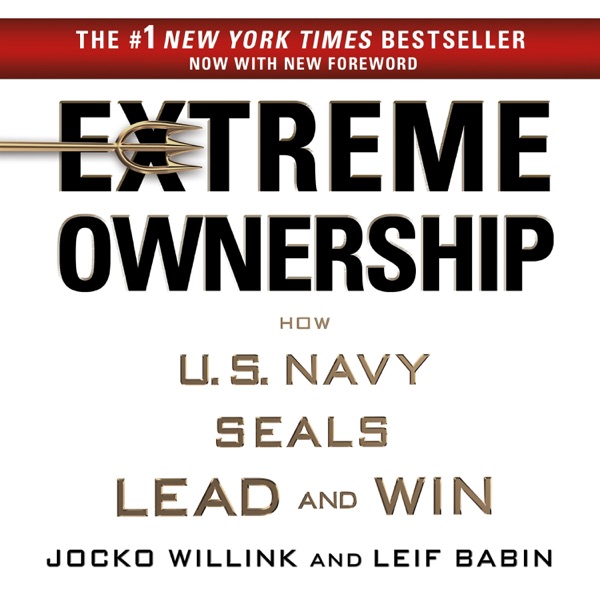


Who gets blamed when things fall apart on your team? Here’s what the Extreme Ownership audiobook is really like.
That’s where Extreme Ownership hit me hardest. Jocko Willink and Leif Babin, both Navy SEAL officers, make an argument so direct it cuts through every excuse I’ve heard—and probably made—about why a project tanked or a deadline slipped. There are no bad teams, only bad leaders. That’s the premise, and it’s delivered by the authors themselves narrating this 8 hours 45 minutes deep-dive into responsibility and leadership.
The book refuses to let you hide behind circumstances or your people’s limitations. Willink and Leif work through real military scenarios—communication breakdowns, mistakes under pressure, operations that failed—and trace each one back to leadership failures at some level. But here’s what makes this different from the usual blame-the-boss discourse: they’re not interested in shame. They want you to own it, learn from it, and fix it in the way that actually builds a functional operation.
Two Commanders, One Unflinching Voice
Listening to Willink and Babin read their own words is essential to this book’s power. They’re not performing; they’re teaching. When Willink explains a SEAL Team strategy or dissects a failure, there’s a certainty in his tone that matters—this is someone who lived it. Babin comes in with concrete examples from his own command experience, and the two voices working through the material feel like a mentoring conversation rather than a lecture. Neither sounds polished or rehearsed; they sound present.
The audiobook’s structure mirrors how they taught these principles in real time: concept, military example, then the civilian application. That last part is where the book earns its bestseller status. Get the Extreme Ownership Audiobook on AmazonListen on Audible · also in Kindle & print Willink and Babin translate SEALs-level discipline into language that works for a startup founder, a middle manager, or anyone leading people in any context. You might be managing a software team, not a combat operation, but the principle of assuming the top-down responsibility for your team’s performance is identical.
The Argument That Sticks
What surprised me, listening through the full performance, is how specifically the authors address the ego problem in leadership. They’re not subtle about it. Most failed leaders, by their framework, aren’t technically incompetent; they’re ego-driven. They can’t admit mistakes, can’t adjust when their approach isn’t working, can’t surrender their need to be right. Willink and Babin build this case methodically, with examples of Navy units that failed because leaders refused to adapt.
The flip side—the leaders who succeeded—shared one trait: they examined their own failures first. Not their team’s failures. Theirs. That responsibility cascades downward. When a leader owns a mistake fully, it changes how a team processes failure. It stops being someone’s fault and becomes a problem to solve.
This is where I found myself pausing the audiobook and sitting with the question: How many times have I deflected instead of owned? The book doesn’t let you stay comfortable.
When the leader owns the failure, everyone wins. When the leader blames others, everyone loses.
Tactical Frameworks You’ll Actually Use
Extreme Ownership doesn’t just hand you philosophy; it gives you methods. The “Plan, Do, Check, Act” cycle, decentralized command authority, and the concept of leading from the front—these become concrete tools you can apply to your actual leadership context. Get the Extreme Ownership Audiobook on AmazonListen on Audible · also in Kindle & print Willink and Babin walk you through how these worked in high-stakes military scenarios, then show how they translate to business environments, schools, or anywhere people need to operate as a functional team.
The audiobook format serves this well because the examples are dense enough that you need to hear them twice. I found myself rewinding sections to catch the full implications of certain scenarios. Willink’s explanations of command structure and decision-making would be harder to follow on a page; hearing it from the author himself makes the clarity feel intentional.
| Author | Jocko Willink |
|---|---|
| Narrator | Jocko Willink and Leif Babin |
| Length | 8 hours 45 minutes |
Who Should Listen
Managers, team leads, business owners, anyone in a role where others look to you for direction. Even if you don’t manage people, the framework applies to how you manage projects and yourself. The book doesn’t waste time on motivation theater; it’s built for people who want a tactical understanding of why teams fail and how to prevent it.
Extreme Ownership isn’t comfortable. Willink and Babin don’t soften the message with empathy-first language. They respect their audience enough to assume you want truth, not coddling. And if you’re reading business leadership books, that’s probably what you came for.