
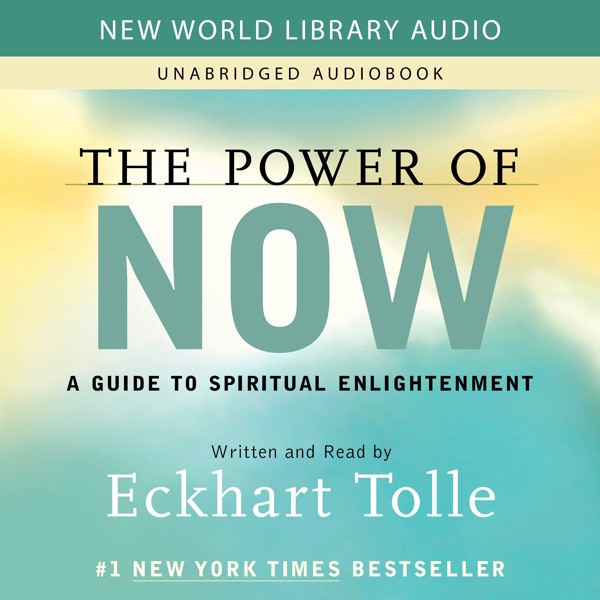


Seven hours and thirty-seven minutes. Below is how the Power of Now audiobook actually plays out loud. That’s not random filler—it’s a meditation stretched across five or six intentional sittings if you let it breathe. I didn’t rush through The Power of Now. I couldn’t. The book’s entire premise asks you to *slow down*, to absorb rather than consume, and the audiobook’s length becomes part of that teaching the moment you press play.
When Eckhart Tolle himself voices his own work, something shifts. There’s no theatrical performance, no attempt to dazzle. His delivery is deliberate and calm—the sonic equivalent of sitting across from someone who has genuinely lived what he’s about to tell you. For 7 hours and 37 minutes, I wasn’t being sold enlightenment. I was being invited into a different way of thinking.
A Philosophy That Asks You to Sit With It
Tolle’s central argument is straightforward but deceptively difficult to implement: most human suffering comes from our relationship with time—specifically, our inability to stop living in regret about the past or anxiety about the future. The solution isn’t escapism. It’s presence. Radical, practical presence.
The audiobook doesn’t rush this idea. Tolle circles back to it repeatedly, approaching it from different angles: spirituality, psychology, neuroscience-adjacent thinking, and lived observation. Some listeners might feel he’s repetitive. I felt he was being thorough. When you’re asking people to rewire their fundamental relationship with consciousness itself, redundancy isn’t laziness—it’s kindness.
What struck me most was his distinction between the thinking mind and consciousness itself. We spend our entire lives identified with our thoughts, he argues, mistaking the narrator for the listener. That conceptual shift—mind versus observer—anchors everything else in the book. It’s not new wisdom (Buddhists and Stoics got there centuries ago), but Tolle’s framing is modern and Western-accessible without feeling dumbed down.
Eckhart Tolle’s Voice, Steady and Unhurried
Here’s where the audiobook format becomes essential. Tolle’s delivery—quiet, measured, occasionally punctuated by a gentle pause—models the very thing he’s teaching. His voice doesn’t rush you. It doesn’t manipulate through inflection. If anything, his narration occasionally feels almost monotone to ears trained on energetic podcasters and charismatic self-help speakers. That flatness is the point. He’s not performing enlightenment; he’s demonstrating presence.
There are moments where his German accent becomes noticeable, especially on certain vowels, but it never distracts. If anything, it grounds the listen in authenticity. This is a man speaking to you, not an actor hired to voice someone else’s wisdom.
Get the The Power of Now Audiobook on AmazonListen on Audible · also in Kindle & printThe pacing of the audiobook allows concepts to settle. When Tolle moves into the practical exercises—small meditations or mental shifts you can try right now—the slower tempo gives you space to actually *try* them while listening. I found myself pausing, not because the narrator was unclear, but because I needed to sit with what he’d just said.
Where the Argument Lands and Where It Wobbles
I’ll be honest: not every claim Tolle makes holds equal weight. His assertion that most mental illness stems from disconnection from the present is provocative but oversimplified. Chemical imbalances, trauma, genetic predisposition—these aren’t solved by awareness alone, no matter how present you become. Tolle acknowledges this tangentially but doesn’t truly grapple with it.
Similarly, his dismissal of goal-setting feels incomplete. Yes, obsessive future-thinking creates anxiety. But some of us have mortgages, medical conditions, and real commitments that require planning. Tolle’s solution—be present *while* you plan—is solid, but it can read as elegant avoidance of the messier truth: living fully in the now and managing adult responsibilities aren’t always compatible.
That said, where Tolle is strongest is in his dismantling of the ego-driven mind. His descriptions of how our ego creates unnecessary suffering—through comparison, resentment, and compulsive thinking—are sharp and honest. If you’ve ever caught yourself spiraling over something that hasn’t happened, or replaying a conversation from years ago, you’ll recognize yourself in his analysis. That recognition is where the book’s real value lies.
The Paradox of Practicing Presence
The deepest insight the audiobook offers is embedded in a paradox: Tolle is teaching you how to *stop trying* to be present. The moment you make “presence” into a goal—something to achieve and measure—you’ve missed the point. You’re using the thinking mind to escape the thinking mind. You’re future-focused about a state that only exists now.
This is where the book becomes genuinely subversive. Tolle isn’t handing you a self-improvement project. He’s suggesting you stop self-improving altogether and just… be. That’s terrifying for people raised on productivity culture. It’s also liberating if you let it land.
I found myself testing his ideas in real time—during the commute, waiting in line, in conversations. Some moments, I caught myself present. Most moments, I didn’t. But the catching—the awareness that I’d drifted—that’s what Tolle calls the gateway. Awareness without judgment. It’s a small thing, but after seven and a half hours with Tolle’s voice in my ear, it felt revolutionary.
Get the The Power of Now Audiobook on AmazonListen on Audible · also in Kindle & printIs This the Book for You Right Now?
If you’re in crisis, seeking immediate practical relief from anxiety or depression, this may not be your book. Tolle is more philosophical than tactical. If you thrive on behavioral checklists and measurable outcomes, his approach will frustrate you. But if you’ve read Atomic Habits and wondered what all that optimization was *for*, or if you’ve dived deep into Mindset and realized that changing your beliefs doesn’t automatically change your nervous system, then Tolle offers something those books don’t: permission to stop trying so hard.
The audiobook format rewards patient, repeated listening. This isn’t a one-time burn. It’s a book you’ll want to revisit, especially when you catch yourself living too much in your head. Tolle’s voice becomes familiar in a way that feels supportive rather than intrusive.
| Author | Eckhart Tolle |
|---|---|
| Narrator | Eckhart Tolle |
| Length | 7 hours 37 minutes |
FAQs
Does Eckhart Tolle narrate the entire audiobook himself?
Yes. Tolle narrates the full 7 hours and 37 minutes, which is rare for self-help audiobooks and adds authenticity to the experience.
Will this book make me enlightened?
No. Tolle himself says enlightenment isn’t a destination you achieve; it’s a shift in how you relate to the present moment. The book offers ideas and techniques, but the work—the daily practice of noticing when you’re lost in thought—is yours.
Is this better than the print version?
They’re different. The audiobook’s pacing and Tolle’s deliberate delivery create a meditative quality that the printed page can’t replicate. If you’ve read the book before, the audio version may feel like encountering it again for the first time.