
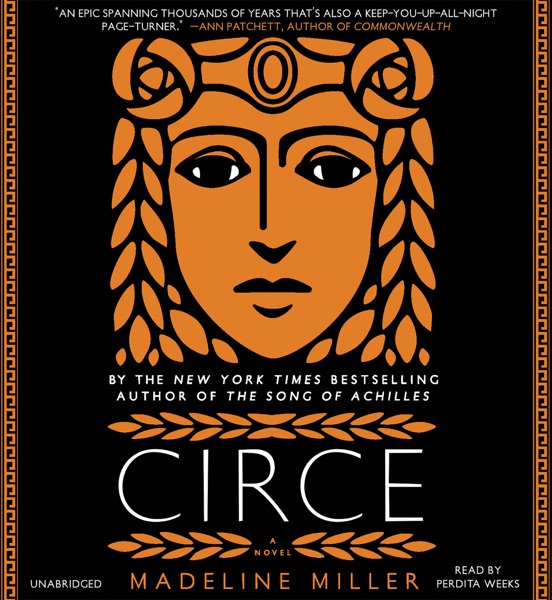


What happens to the women the old myths shove to the margins — the ones handed a single adjective, usually “witch,” and then written out of the story? Below is how the Circe audiobook actually plays out loud. Madeline Miller spends twelve hours answering that question, and by the end you wonder how anyone ever thought Circe was a minor character.
A goddess nobody bothered to look at properly
You probably know Circe as a footnote in the Odyssey: the enchantress on the island who turns Odysseus’s men into pigs. Miller takes that footnote and builds a whole life around it — childhood in her father Helios’s blinding halls, the long humiliation of being the odd daughter with the strange voice, and the slow, hard-won discovery that she can bend the world with herbs and will. This is a coming-of-age story that happens to span centuries, and it never once feels rushed or padded.
What struck me most is how grounded it all is. Circe is immortal, but Miller writes her hungers and her loneliness like a woman you’d recognize. The gods here are petty, glittering, and cruel in the casual way powerful people are cruel, and Circe’s exile among them reads less like punishment and more like the first honest room she’s ever been given.
Perdita Weeks reads it like she means every word
The audiobook runs 12 hours and 8 minutes, narrated by Perdita Weeks, and I’d argue this is one of those rare cases where the performance rivals the prose. Weeks gives Circe a low, watchful voice — dry when she’s wounded, warm when she finally lets someone in — and she resists the temptation to make the gods sound cartoonish. Helios rumbles with contempt without ever tipping into camp. When the famous men arrive on the island, Weeks lets their charm curdle so gradually you almost don’t notice the menace until it’s on top of you.
Miller’s sentences are already built for the ear — she writes in clean, image-heavy lines that land like spoken poetry — and Weeks trusts them. She doesn’t rush the pauses. There’s a stretch involving a monster (I’ll say nothing more) where she drops her voice almost to a whisper, and I found myself holding my breath in my kitchen like an idiot. If you’ve been let down by over-produced audiobooks that drown the text in performance, this is the antidote.
Get the Circe Audiobook on AmazonListen on Audible · also in Kindle & printThe pull is emotional, not mythological
Here’s the thing that surprised me: you don’t need to remember your Greek myths to be swept up. The names — Prometheus, Daedalus, the Minotaur, Odysseus — arrive like weather, and Miller always tells you what you need to know. What carries the book is the emotional throughline: a woman learning that power and solitude are two names for the same thing, and then deciding what she’s willing to trade to change that.
If you loved the aching, character-first pull of Miller’s The Song of Achilles, know that Circe is quieter and, I think, wiser — less about doomed young love and more about a whole self assembled over centuries. And if what you actually crave is the pleasure of watching one contained life open into something vast and luminous, the way Amor Towles pulls off in A Gentleman in Moscow, Circe scratches that same itch through a very different door.
Small reservations, honestly
The middle sags a touch. There’s a season of the book where Circe is largely alone on her island, tending her craft, and while I understand why Miller lingers there — the whole point is the weight of endless time — a couple of those chapters test your patience on audio, where you can’t skim. Stick with it. The last third gathers everything back up and pays it off completely.
I’d also gently warn that if you want plot fireworks, this isn’t that. It’s interior, deliberate, and it rewards attention. I listened mostly on long evening walks, and that pace suited it perfectly — it’s a book that wants your full quiet, not your commute-multitasking brain.
Who should press play
Reach for this if you like literary fiction that happens to wear a myth’s clothes, if you’re drawn to stories about outsiders remaking themselves, or if you simply want twelve hours in the company of a narrator who never hits a false note. It’s a spectacular gateway for people who think they “don’t do” mythology — because really, they do; they just haven’t been given a character worth staying for yet.
Circe is the best kind of retelling: it doesn’t just dust off an old story, it argues with it, and it wins. Weeks makes that argument sound inevitable.
| Author | Madeline Miller |
|---|---|
| Narrator | Perdita Weeks |
| Length | 12 hrs and 8 mins |