
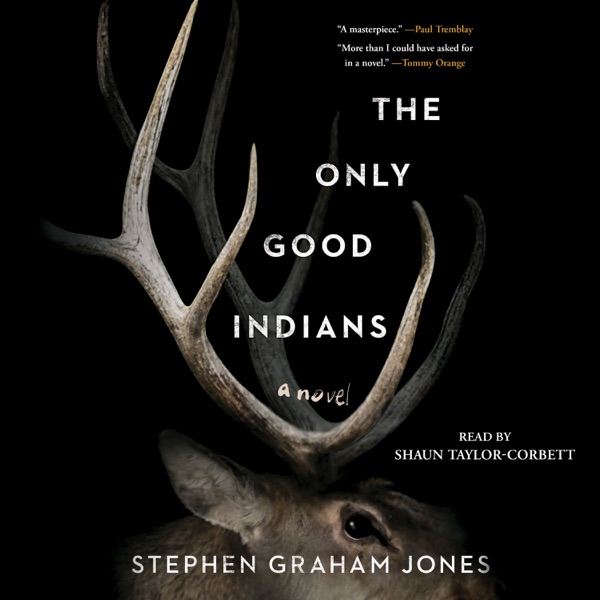


There’s a moment maybe a third of the way into The Only Good Indians where I had to pause, take the headphones off, and sit on my back step for a while before I could keep going. That is the setup; now the Only Good Indians audiobook itself. Not because it was gory, though it can be, but because Stephen Graham Jones had just quietly reached into a scene I thought I understood and turned it into grief. I do this for a living and I still wasn’t ready for it.
This is the book people kept telling me to listen to, and I resisted for no good reason other than that “literary horror” sometimes means “the scares got left in the edit.” That is emphatically not the case here. What follows is my honest, spoiler-free take on the audiobook, from someone who listens to a lot of horror and rarely comes away this rattled.
| Author | Stephen Graham Jones |
|---|---|
| Narrator | Shaun Taylor-Corbett |
| Length | 9 hrs 3 mins |
A hunting trip ten years gone still owes a debt, and something has come to collect
The setup is deceptively simple. Four Blackfeet men, once young and careless, did something on a hunt a decade ago that crossed a line they didn’t fully understand at the time. Now they’re grown, scattered, trying to live ordinary lives, and something patient and wounded has started closing the distance between them. That’s all I’ll say about the machinery, because a big part of the pleasure is watching Jones let the dread accumulate rather than announce itself.
What surprised me is how much of the horror is domestic and specific. This is a book about basketball games and busted trucks and the ache of leaving the reservation, or not leaving it. The supernatural threat is real and genuinely frightening, but Jones roots it in the everyday texture of these men’s lives so completely that by the time the entity moves, it feels less like a monster arriving and more like a bill coming due.
Stephen Graham Jones writes horror that grieves as much as it scares
If you came to Jones the way a lot of listeners did, through My Heart Is a Chainsaw, you already know he can do the meta-slasher thing with real affection. This is a different, older, sadder register. The prose is dense with feeling and it circles its characters’ regrets the way you circle a bruise with your thumb, unable to leave it alone.
He’s also doing something structurally daring that I won’t spoil, except to say the point of view does not sit still, and one section in the back half completely reoriented how I understood the whole story. It reminded me of the grief-logic of Pet Sematary, where the terror isn’t the dead coming back so much as what a grieving person will justify to themselves. Jones is working in that same emotionally honest territory, but through a Blackfeet lens that makes the stakes feel entirely his own.
Shaun Taylor-Corbett reads this like he lives inside it
The audiobook runs 9 hours and 3 minutes, narrated by Shaun Taylor-Corbett, and I cannot overstate how right this pairing is. Taylor-Corbett is a Native performer, and the casting isn’t just good optics, it’s audible in every line. He reads the reservation cadences, the teasing between old friends, the quiet fatalism, all of it, like a language he already speaks rather than one he’s studying.
His restraint is the thing that got me. When Jones’ prose spirals into a character’s panic, Taylor-Corbett doesn’t over-perform it. He lets the sentences do the running and keeps his voice low and close, which somehow makes the frightening passages land harder. There’s a stretch involving a young woman late in the book where his delivery shifts into something taut and physical, and I was gripping my coffee mug without realizing it. If you’re picky about narration the way I am, this is a performance that respects both the text and your intelligence.
Get the The Only Good Indians Audiobook on AmazonListen on Audible · also in Kindle & printThe scariest thing here isn’t the entity, it’s the weight of being watched by your own past
I’ve listened to plenty of horror that runs on jump-scares and dwindling cast lists. This one runs on guilt, and it’s so much more effective for it. Jones understands that the worst haunting is the one you half-agree with, the sense that some part of you believes you have this coming. The men in this book are not monsters. They’re people who did a thoughtless thing and have to reckon with a consequence far larger than the act.
That’s not to say Jones goes soft on the horror. When the violence comes it is sudden and unsentimental, closer to the relentless, no-safe-characters feeling of The Troop than to anything cozy. But even at its most brutal, the book never loses its grip on why any of it matters. That balance, tenderness and terror sharing the same sentence, is incredibly hard to pull off, and on audio Taylor-Corbett makes it seamless.
Who I’d press this audiobook on, and who I’d warn first
I’d hand this to anyone who wants horror with a beating heart, who likes their scares tangled up with real character work, and who’s curious about a corner of American life that horror rarely centers. It’s a nine-hour listen that feels both propulsive and unhurried, and I finished it over two days because I genuinely couldn’t stop.
My one honest caution: this is not a comfort listen. It deals with grief, with animals, and with the kind of violence that lingers, so if you’re sensitive to any of that, go in aware. And Jones’ prose is doing a lot at once, so this rewards active listening over half-distracted dish-washing. Give it your attention and it will give you something that sticks around for weeks. It certainly has for me.
Get the The Only Good Indians Audiobook on AmazonListen on Audible · also in Kindle & printThree things I keep turning over
I’d genuinely love to hear other listeners on these:
- Did Taylor-Corbett’s restrained, close-mic delivery pull you deeper in, or did you find yourself wanting a more theatrical read for the horror beats?
- When the point of view shifts in the back half, did that reorient the whole story for you the way it did for me, or did it break the spell?
- If this was your first Stephen Graham Jones, did it make you want to reach for more of his work, or did the emotional weight make you need a breather first?