
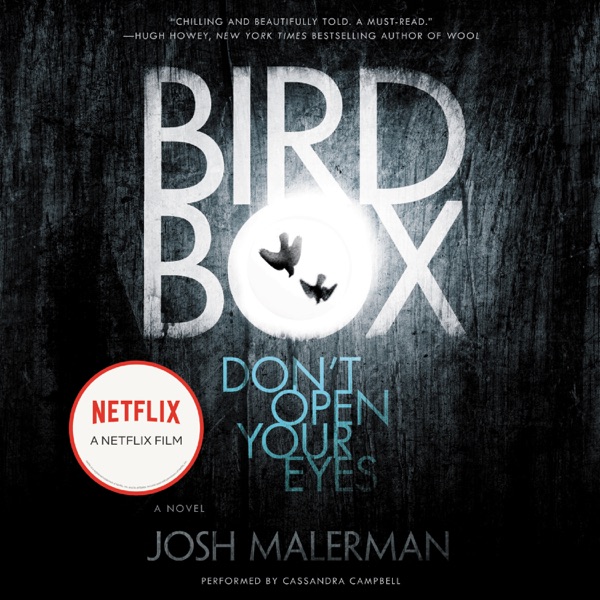


Cassandra Campbell narrates Bird Box the way you’d whisper across a dark room to someone you’re afraid will answer back. What follows is my honest read on the Bird Box audiobook. That’s the first thing that hit me. She keeps Malorie’s voice low and clenched, like every sentence is being rationed, and when she reads the scenes where the characters have to move through the world with their eyes shut, she slows the cadence just enough that you start holding your breath along with them. It’s a masterclass in restraint. Nine hours and fifteen minutes of a narrator who understands that in a story about not looking, the scariest thing you can do with your voice is go quiet.
Why blindfolds make better audio than film ever could
Here’s the strange gift of listening to Bird Box instead of watching it: the medium and the material are doing the same trick. The characters survive by denying themselves sight. You, the listener, are also getting the whole world through sound alone. Josh Malerman writes a post-apocalypse where something is out there, and to see it is to be driven instantly, violently mad. So the survivors tape blankets over the windows, feel their way down hallways, and learn to read the house by creaks and birdsong. Campbell leans all the way into that sensory swap. A dragged chair, a held breath, the flutter of birds in a box by the door that signals something has arrived. On audio, you’re navigating blind right alongside them, and it is unbearably tense in the best way.
Malorie carries it, and Campbell carries Malorie
The book braids two timelines, one in a house full of frightened strangers and one on a river years later with two small children who’ve been trained since birth to keep their eyes closed. It could get confusing on audio. It doesn’t, because Campbell gives each thread a different temperature. The house is warmer, more crowded, full of overlapping personalities she distinguishes without ever hamming it up. The river is stripped down and severe, all instruction and fear. Malorie in the later timeline has hardened into something almost cruel, and Campbell never softens her to make her likable. That honesty is what makes the whole thing land.
Bird Box on Audible/Amazon
Content notes before you go in
Quick aside, because I like knowing this stuff ahead of time: there’s suicide and self-harm (central to the premise, and depicted more than once), childbirth under horrific conditions, animal death, and a persistent atmosphere of dread rather than gore. It’s psychological horror, not splatter, but the suicide content specifically is heavy and recurring. If that’s a hard line for you, go in aware.
| Author | Josh Malerman |
|---|---|
| Narrator | Cassandra Campbell |
| Length | 9 hrs 15 min |
Does it hold up on a second listen?
I’ve now gone through it twice, and yes. The first time you’re white-knuckling the plot. The second time you notice how carefully Malerman withholds, and how Campbell is quietly playing the ending from the very first chapter. Nothing about the audio production is flashy. No music, no gimmicks, just one exceptional narrator and a house full of taped windows. That’s all it needs. At just over nine hours it’s a tight, bingeable listen, the kind you’ll finish in two or three sittings and then sit in silence for a minute afterward.
What to cue up next
- For more strangers-trapped-in-a-house dread: The Cabin at the End of the World by Paul Tremblay, which pulls the same “is the apocalypse real or are we losing it” thread even tighter.
- For claustrophobic body-horror survival: The Troop by Nick Cutter, if you want your isolation with a lot more viscera.
- For ambiguous, is-it-supernatural-or-not unease: A Head Full of Ghosts by Paul Tremblay, another one that trusts you to sit in the not-knowing.
If you only take one recommendation from me this month, make it this one. Grab the Bird Box audiobook here and let Cassandra Campbell walk you through the dark.
Two quick questions for you: Did you listen before or after seeing the film, and did that change how the ending hit? And which timeline gripped you harder, the house or the river? Tell me in the comments.
— Clara